

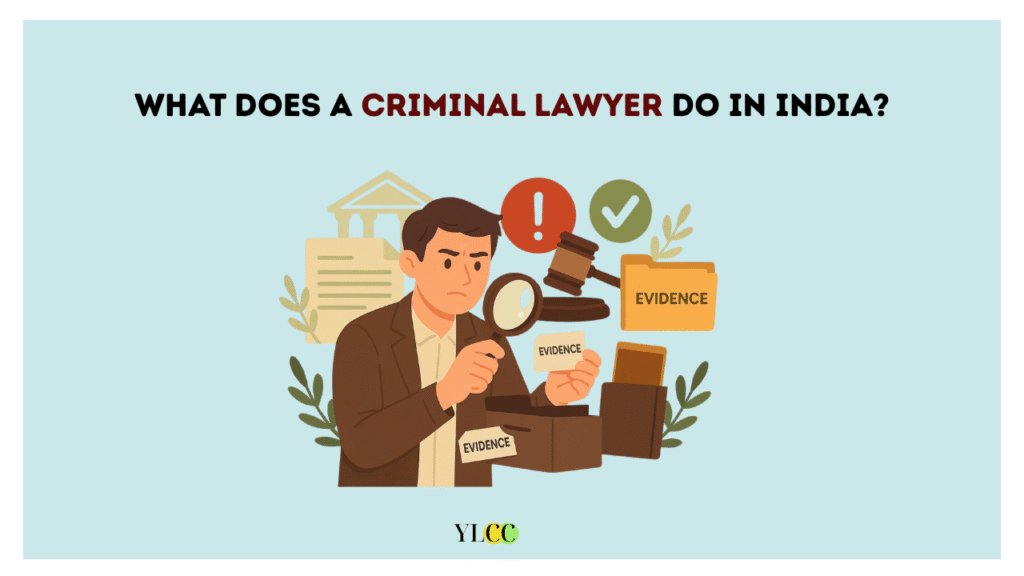
Even if you have nothing to do with law, chances are you have heard these names: Ram Jethmalani, Mukul Rohatgi, Kapil Sibal and Sidharth Luthra. Jethmalani was one of India’s most prominent criminal lawyers, while Luthra is known for his criminal law practice, including high-profile criminal matters.
Criminal law is one of the most recognisable areas of legal practice, dealing with offences, investigations, trials, appeals and the criminal justice system. But the reality is much more than dramatic courtroom arguments. Criminal lawyers spend substantial time on legal research, drafting, evidence, case preparation, client conferences and procedural strategy alongside advocacy. Let’s look at what criminal lawyers actually do, who they work for, the skills they need, and how you can build a career in the field.
Quick answer
A criminal lawyer in India works in the criminal justice system, defending people accused of offences (or, on the other side, prosecuting) and handling related criminal matters. The work includes advising clients, researching the law and facts, drafting applications and documents (like bail applications and other pleadings), building the case or defence, and representing clients in court through hearings and trials.
It is disputes and litigation work with the drama, stakes and human element of criminal justice, involving research, drafting, courtcraft and advocacy. Criminal lawyers work largely in litigation (chambers, independent practice) and some in related settings. It rewards advocacy, reasoning, courtcraft and resilience.
What a criminal lawyer actually does
Day to day, a criminal lawyer might advise clients on their situation and options, research the law and analyse the facts of a matter, draft applications, pleadings and documents (such as bail applications), build the case or defence strategy, and appear in court for hearings and trials, examining witnesses and making arguments. As with all litigation, much of the work is preparation, with court appearances being the visible part. Juniors in criminal practice spend a lot of time on research, drafting, court work and learning courtcraft under seniors.
Typical matters
Criminal lawyers work on a range of criminal matters, from bail and various offences to trials and appeals, across the criminal courts. Related and overlapping areas include white-collar crime (financial and corporate offences), which is a more corporate-flavoured specialisation.
Who hires criminal lawyers
Criminal practice is largely a litigation field: many criminal lawyers work in chambers and independent practice, junior to and then as advocates. There are also related roles (such as prosecutorial roles in the government system). It is a courtroom-centred area.
Skills you need
Criminal law rewards strong advocacy and courtroom skills, quick reasoning and analysis, precise drafting, and a solid understanding of criminal law and procedure. Because the work is often high-stakes and deeply human, resilience, composure, sound judgement and the ability to think clearly under pressure are equally important.
How to get in
Through criminal litigation internships (with criminal advocates and chambers), building courtcraft, research and drafting skills, and pursuing criminal practice via the usual litigation path (enrolment and junioring). Real courtroom and chamber exposure is the way in.
Who might enjoy it (and who might not)
You may enjoy criminal law if you like advocacy, courtcraft, the courtroom, and high-stakes human matters and can handle intensity and a building path. You may find it less suitable if you want transactional work or a calmer, desk-based role. It suits the advocacy-minded and resilient drawn to the courtroom.
FAQs
- What does a criminal lawyer do? Works in the criminal justice system, defending accused persons (or prosecuting), advising clients, researching, drafting applications and pleadings, building the case, and appearing in court.
- Is criminal law all courtroom drama? No. Much of it is research, drafting and preparation; court appearances are the visible part of substantial behind-the-scenes work.
- How is criminal law different from white-collar crime? White-collar crime focuses on financial and corporate offences with a corporate flavour; general criminal practice covers a broader range of offences and is more courtroom-centred.
- What skills do criminal lawyers need? Advocacy, courtcraft, reasoning, drafting, knowledge of criminal law and procedure, resilience, and thinking on your feet.
- How do I become a criminal lawyer? Through criminal litigation internships, building courtcraft and skills, and pursuing criminal practice via enrolment and junioring.
Thank you for reading!
If you found this article helpful, explore more resources from YLCC and continue your legal learning journey.