
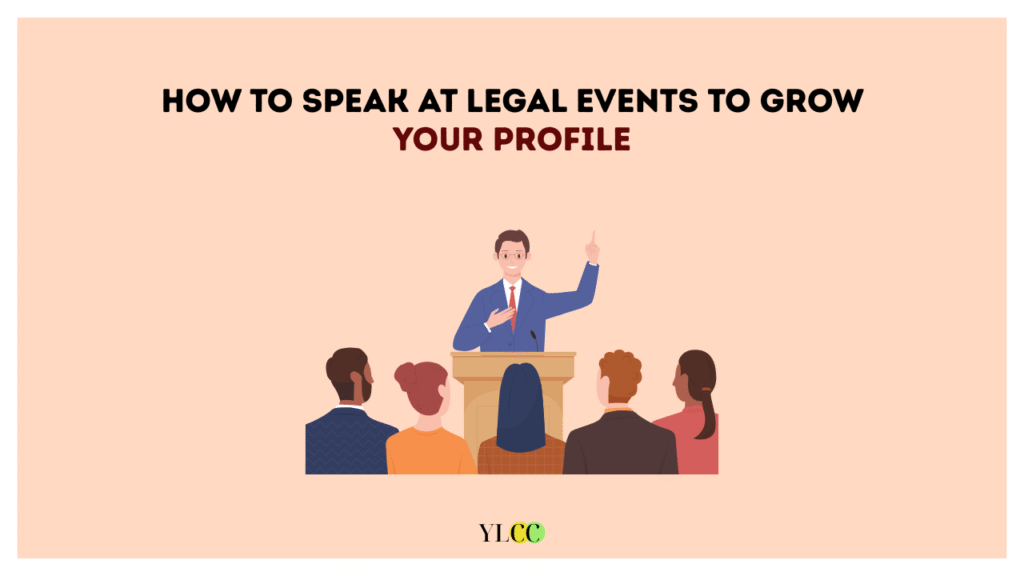
Speaking at legal events, including panels, seminars, webinars, conferences and professional discussions, can be a valuable way for a lawyer to build professional experience, reputation and recognition in an area of interest. A strong presentation allows people to see how you think, explain complex issues and engage with a subject, rather than simply reading about your qualifications.
For advocates in India, however, speaking should not be treated as a marketing shortcut. Rule 36 of the Bar Council of India Rules prohibits advocates from advertising or soliciting work, directly or indirectly. Speaking can therefore be used to share genuine knowledge and contribute to professional discussions, but the manner and purpose of the activity should be kept within the applicable professional rules.
Quick answer
Speaking at legal events can help build a lawyer’s professional profile by demonstrating knowledge, communication skills and genuine subject-matter expertise, while also creating opportunities to meet other professionals and participate in the legal community.
To use speaking effectively:
- Build genuine expertise in an area you can speak about with substance.
- Look for accessible speaking opportunities, including seminars, webinars, panels, discussions and academic events.
- Prepare thoroughly and make the presentation useful to the audience.
- Keep the contribution focused on informing and sharing expertise, rather than advertising or soliciting professional work.
- Build professional relationships around the opportunity and maintain a consistent record of substantive contributions.
The compliance distinction is important. Rule 36 prohibits advocates from soliciting work or advertising, directly or indirectly. Therefore, there is no blanket proposition that every speaking activity is automatically permissible simply because it is an event or educational programme. The subject, content, presentation and surrounding circumstances should be considered, particularly where the speaking opportunity is connected with promotion of legal services.
The aim should be simple: develop genuine expertise, contribute something useful, speak well and build professional recognition through the substance of your contribution. This is general guidance, not legal advice. Verify the current professional rules before adopting a particular profile-building strategy.
Why speaking can grow your profile
Speaking gives you an opportunity to demonstrate your knowledge in real time. An article can show how you write, but a presentation also shows how you structure an argument, explain a difficult issue and respond to questions. Over time, a record of thoughtful and well-prepared contributions can become part of your professional reputation.
Speaking can also expand your professional network. Events bring together lawyers, academics, students, professionals and other participants with shared interests. The relationships built through genuine professional participation can become valuable over time.
The important point is that the profile comes from the contribution itself. For an advocate, speaking should not become a disguised way of advertising services or soliciting clients. Rule 36 expressly restricts direct and indirect advertising and solicitation by advocates.
How to use speaking to grow your profile
1. Build genuine expertise
Have something worth saying before worrying about getting a stage. Choose an area that you know well or are actively developing expertise in, and build enough substance to discuss it meaningfully. Your credibility ultimately rests on the quality of what you contribute.
2. Seek and take accessible opportunities
You do not need to begin with a major conference. Look for seminars, webinars, university events, panel discussions, professional associations and other appropriate forums where your knowledge is relevant. Smaller opportunities can help you develop experience and create a record of substantive participation.
3. Prepare and deliver well
Know your subject, organise your points clearly and tailor the presentation to the audience. Good speaking is not about using complicated language or trying to sound impressive. It is about making the subject understandable, useful and engaging.
4. Keep it focused on genuine expertise-sharing
Your objective should be to explain, analyse, teach or contribute to the discussion. Avoid turning a professional speaking opportunity into a pitch for your services. For advocates, this distinction is especially important because advertising and solicitation are restricted under Rule 36.
5. Follow through professionally
After an event, maintain the professional relationships you have developed. Thank organisers, stay connected with fellow participants where appropriate, and continue contributing useful work. A single speaking appearance is one contribution. A sustained record of good work is what builds recognition over time.
Start accessible and build up
You do not need a large stage to begin. A university seminar, professional discussion, webinar, panel or academic event can provide a useful starting point. These opportunities allow you to learn how to structure a presentation, answer questions and adapt your explanation to different audiences.
As you gain experience, you can take on more substantial speaking roles and develop a clearer area of expertise. The goal is not to collect appearances. It is to build a meaningful track record of useful contributions while remaining within the professional rules applicable to you.
YLCC ACTION STEP: Identify one appropriate speaking opportunity related to an area you genuinely know or are developing expertise in. Prepare a substantive presentation, focus on informing the audience rather than promoting yourself, and use the opportunity to develop your speaking skills and professional relationships. Before participating, particularly as an advocate, consider whether the content or presentation could amount to advertising or solicitation and verify the applicable professional rules.
If this is you
If speaking intimidates you: Start with smaller, lower-pressure opportunities. Good preparation matters more than trying to appear naturally confident, and speaking becomes easier as you get more experience.
If you worry that speaking might breach the rules: Keep the focus on genuine knowledge-sharing and examine the context carefully. Do not assume that calling an appearance “educational” automatically makes it permissible. Advocates remain subject to the restrictions on advertising and solicitation under Rule 36.
If you feel too junior to be invited: Look for accessible opportunities where your current knowledge is genuinely relevant. You can begin with a focused topic rather than waiting until you have years of experience or a major professional title.
PLEASE DON’T DO THIS: Please don’t use a speaking opportunity as a disguised advertisement for your legal services or as a means of soliciting work. Advocates are subject to Rule 36’s restrictions on advertising and solicitation, including indirect forms. Don’t speak beyond your genuine knowledge, present unverified legal information as settled law, or turn up without adequate preparation. Build your profile through substantive contributions, professional conduct and consistent expertise-sharing.
FAQs
- How does speaking at legal events grow a lawyer’s profile? It gives you an opportunity to demonstrate knowledge and communication skills, contribute to professional discussions and build professional relationships, which can strengthen recognition of your expertise over time.
- Can advocates speak at legal events? Speaking at an event is not, by itself, the issue addressed by Rule 36. Advocates must ensure that their participation and presentation do not amount to prohibited advertising or solicitation of work, and the current professional rules should be verified for the particular context.
- How do I find speaking opportunities? Start with appropriate and accessible opportunities such as university seminars, webinars, panels, professional discussions and academic or professional events where your knowledge is relevant.
- What if I am nervous or relatively junior? Start with smaller opportunities, choose subjects you genuinely understand, prepare thoroughly and build experience gradually. You do not need to begin with a major conference.
- How can I get the most from a speaking opportunity? Prepare well, make the presentation genuinely useful, keep it focused on the subject rather than self-promotion, and build professional relationships through continued substantive participation.