

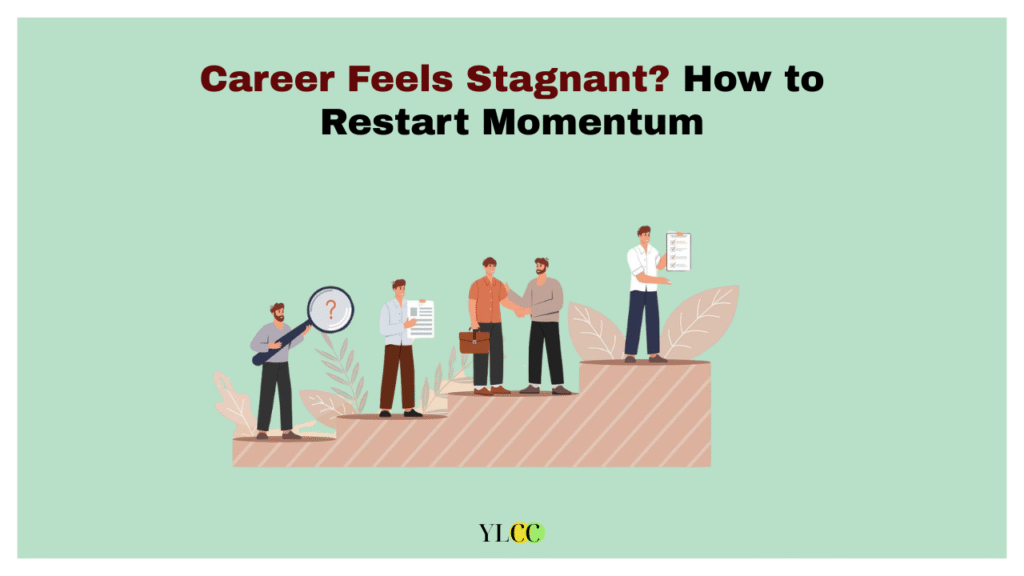
If your career feels stagnant, as though you have plateaued, lost momentum or become stuck in a rut, please know that you are not alone. Feeling stuck does not mean you are failing, and your career does not have to remain this way. With some reflection and deliberate action, you can work towards renewed growth and direction. Here is a supportive, practical guide to understanding career stagnation and restarting your momentum.
Quick answer
To restart momentum when your career feels stagnant, start by understanding why you feel stuck and then take deliberate steps towards growth.
Begin by being kind to yourself. Stagnation is not a verdict on your ability or potential. It is a signal to examine what is happening and decide what may need to change.
Reflect on whether you lack growth or challenge, feel dissatisfied with your role or practice area, have lost motivation or direction, or are dealing with something deeper, such as burnout or unhappiness. Once you understand the cause, set a direction and identify goals that would help you feel more engaged.
Take practical steps towards those goals by pursuing new challenges, learning opportunities, skills, responsibilities or a change in role, practice area or environment. Reconnect with what matters to you, seek mentorship and explore opportunities that can help you grow.
If your stagnation reflects deeper unhappiness or burnout, address that as well and seek appropriate support. The objective is not simply to become busy again, but to build a career that feels more purposeful and sustainable.
First, keep perspective and diagnose the stagnation
Feeling stagnant can be frustrating, particularly when you are working hard but do not feel that you are progressing. You may find yourself questioning your choices, comparing your career with those of others or wondering whether you have lost your direction.
Try not to treat these feelings as proof that you are failing. Instead, approach them as useful information about your current situation. Recognising that something needs to change can be the beginning of a more deliberate career path.
The next step is to understand the cause. Are you lacking opportunities to learn or take on responsibility? Does your current role or practice area no longer interest you? Have you lost sight of what you want from your career? Or are you experiencing deeper unhappiness or burnout?
Different causes require different responses. If you need greater challenge, pursuing new responsibilities may help. If your practice area no longer fits, exploring a change may be more appropriate. If burnout is involved, simply adding more work or goals may not address the underlying problem.
An honest assessment of your situation helps you identify the changes most likely to make a difference.
Set a direction and take deliberate action to grow
Set a direction and goals
Once you have a clearer understanding of why you feel stuck, consider what would make your career feel more meaningful or engaging.
Think about the work you enjoy, the skills you want to develop and the responsibilities you would like to take on. You may want to deepen your expertise, explore another practice area, pursue a different role or find opportunities that offer more challenge.
You do not need to have your entire career mapped out. Start with a direction that feels relevant to your current needs and identify practical goals that can help you move towards it.
Take deliberate action to grow
A sense of direction becomes useful when you act on it. Look for ways to develop your skills, learn something new, take on suitable responsibilities or pursue opportunities that align with your goals.
Depending on the cause of your stagnation, this might mean seeking more challenging work, exploring a different role, changing practice areas or considering a new professional environment.
The important thing is to make your actions purposeful. Being busy is not the same as progressing. Choose steps that address the reason you feel stuck and help you move towards the kind of career you want.
A clear direction, supported by deliberate action, gives you something concrete to work towards and helps you begin rebuilding momentum.
Re-engage, refresh and address deeper issues
Reconnect with what matters to you
When work begins to feel repetitive or directionless, reconnect with the aspects of your career that you value. Consider what originally drew you to law, what kind of work interests you now and what you would like to learn or contribute.
Seek new challenges, learning opportunities, mentorship or professional connections that can help you see your work from a fresh perspective. Sometimes, a renewed sense of direction begins with making changes within your current role rather than leaving it entirely.
Address any deeper issues
Career stagnation can sometimes reflect something more than a lack of progress. You may be experiencing sustained unhappiness, exhaustion or burnout, or you may have realised that your current career direction no longer fits your needs.
If that is the case, take those concerns seriously. Consider speaking with a trusted mentor, someone you feel comfortable talking to or an appropriate professional who can help you work through the situation.
You do not have to solve every problem through greater productivity or more ambitious goals. Sometimes, restarting momentum means addressing what has been draining your energy or considering a more fundamental change.
The aim is to build renewed momentum in a way that supports both your professional growth and your wellbeing.
YLCC ACTION STEP: If your career feels stagnant, begin by identifying why. Consider whether you lack growth or challenge, feel dissatisfied with your role or practice area, have lost motivation or are dealing with something deeper, such as burnout. Set a direction, establish practical goals and take deliberate steps towards growth through learning, new responsibilities, mentorship or a change in role or environment. Reconnect with what matters to you, and seek appropriate support if deeper issues are involved.
If this is you
If you feel that your career has plateaued, identify what is missing and what would help you grow. Seek new challenges, learning opportunities or responsibilities, and consider whether your current role still fits your interests.
If you have lost motivation or direction, take time to reconnect with what matters to you. Reflect on your interests, establish meaningful goals and seek opportunities that help you re-engage with your work.
If your stagnation feels deeper, particularly if you are experiencing sustained unhappiness or burnout, do not dismiss it as a motivation problem. Consider what needs to change and seek support where appropriate. Restarting momentum sometimes begins with taking care of yourself and addressing the underlying issue.
FAQs
- How do I restart momentum when my career feels stagnant? Identify why you feel stuck, set a direction and meaningful goals, take deliberate steps towards growth, reconnect with what matters to you and address any deeper issues that may be affecting your career.
- Does feeling stagnant mean I am failing? No. Feeling stagnant can be a signal that something needs to change, rather than a verdict on your abilities or potential. Use it as an opportunity to reflect on what you need from your career.
- How do I identify why my career feels stuck? Consider whether you lack growth or challenge, feel dissatisfied with your role or practice area, have lost motivation or direction, or are experiencing deeper unhappiness or burnout. Understanding the cause helps you identify a suitable response.
- What actions can help me regain career momentum? Pursue relevant learning, develop new skills, seek additional responsibilities, explore different roles or practice areas, and reconnect with mentors and professional networks. Choose actions that address the reason you feel stuck.
- What if my career stagnation is related to burnout? Take the underlying issue seriously rather than relying only on greater productivity or new goals. Consider making appropriate changes and seeking support from trusted people or a relevant professional.