
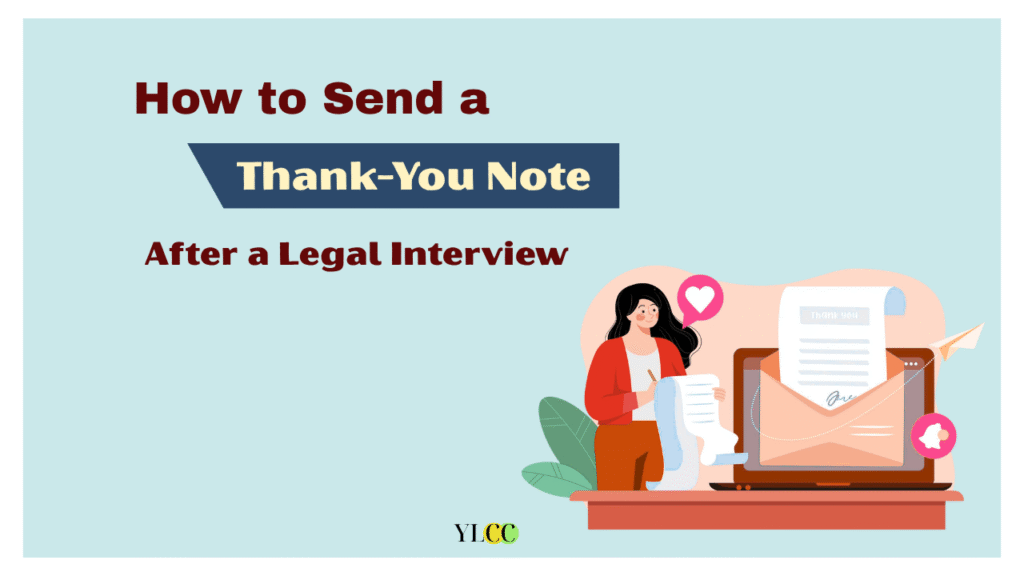
After an interview, a small question often nags: should I send a thank-you note, or will it seem needy? It is a fair worry, and the answer is mostly yes; a brief, genuine thank-you is a nice, professional touch that rarely hurts and can quietly help. The key is doing it well: short, sincere, and timely, not gushing or generic. Let me show you whether and when to send one and exactly what to write so your thank-you note leaves a good final impression rather than an awkward one.
Quick answer
Sending a brief, genuine thank-you note after a legal interview is generally a good, professional touch. Send it soon after the interview (within a day or so), keep it short and sincere, thank the interviewer for their time, reaffirm your genuine interest, and optionally reference something specific from the conversation. Do not make it long, gushing, or generic, and do not use it to over-sell or seem desperate. A simple, warm, professional note leaves a positive final impression. It is a small courtesy that reflects well on you.
Should you send one?
In most cases, yes. A brief thank-you note is a professional courtesy that shows good manners, reaffirms your interest, and keeps you positively in mind, and it very rarely counts against you. The worry about seeming needy comes from doing it badly (a long, gushing, or over-eager note), not from the act itself. Done well (short, sincere, and professional), it is a nice touch that reflects your professionalism. If you are unsure, a simple, genuine thank-you is a safe and generally positive choice.
When and how to send it
- Timing: soon after the interview, typically within a day, while it is fresh for both of you.
- Format: usually a short, professional email to the interviewer (or the appropriate contact), on the same thread if there is one.
- Length: brief. A few sentences is ideal; a long note undercuts the gesture.
- Tone: warm, sincere and professional, not gushing, over-eager or generic.
What to write
Keep it simple and genuine. Thank the interviewer for their time, express your continued genuine interest in the role, and optionally reference something specific from the conversation (a topic you enjoyed discussing, something you learned) to make it personal and sincere rather than generic. Close warmly. For example: “Thank you for taking the time to speak with me today. I really enjoyed learning about the team’s work on [specific], and it reinforced my interest in the role. Please let me know if there is anything else you need from me.” Short, specific, sincere, done.
YLCC ACTION STEP: After your next interview, send a brief thank-you email within a day: thank them for their time, reaffirm your genuine interest, and reference one specific thing from the conversation. Keep it to a few sincere sentences. That small, timely, genuine note is a professional touch that leaves a good final impression.
PLEASE DON’T DO THIS: Please don’t send a long, gushing, or over-eager thank-you note; it can read as needy, which is the very thing you were worried about. And please don’t send a generic, obviously templated note with no specificity; a short, sincere, personal one is far better. And do not use the note to over-sell yourself or pester; keep it a simple, warm courtesy.
FAQs
- Should I send a thank-you note after a legal interview? Generally yes. A brief, genuine thank-you is a professional courtesy that reaffirms your interest and rarely hurts. The key is doing it well: short and sincere.
- When should I send it? Soon after the interview, typically within a day, while it is fresh for both of you.
- What should a thank-you note say? Thank them for their time, reaffirm your genuine interest, and optionally reference something specific from the conversation. Keep it brief and sincere.
- Will a thank-you note seem needy? Only if done badly (long, gushing, over-eager). A short, sincere, professional note reflects well on you and is not needy.
- How long should it be? Brief, a few sincere sentences. A long note undercuts the gesture.
Thank you for reading!
If you found this article helpful, explore more resources from YLCC and continue your legal learning journey.