
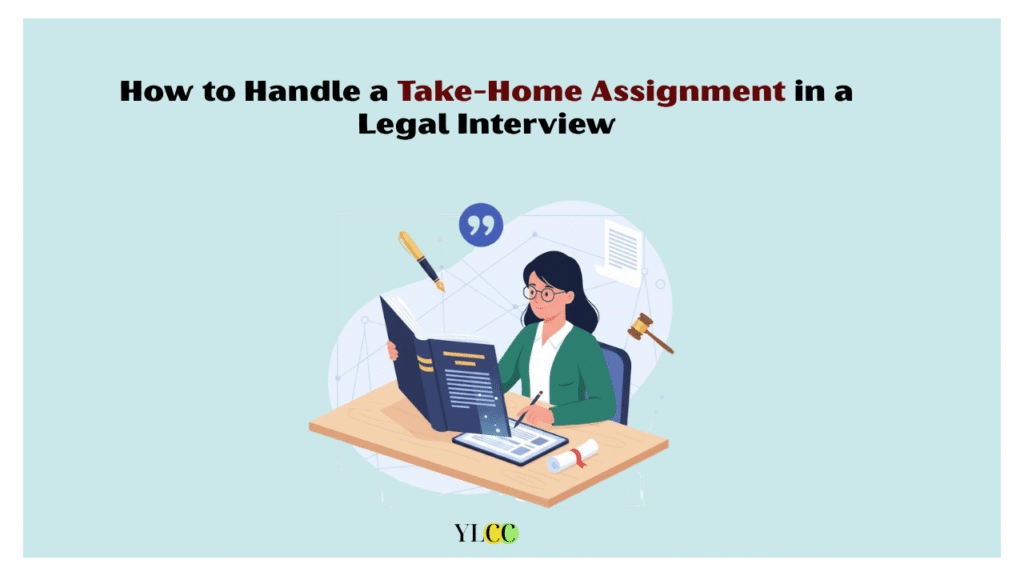
A take-home assignment is a gift and a trap at the same time. Unlike an on-the-spot exercise, you have time to do it well, which is the gift. The trap is misjudging the effort: doing too little and looking careless, or overdoing it and burning out (or missing the point). A take-home is a real chance to show your quality of work, so it is worth getting right. Let me show you how to handle a legal take-home assignment: how much to put in, what interviewers want, and how to stand out sensibly.
Quick answer
A take-home assignment lets you demonstrate your real quality of work with time to do it properly, so treat it seriously: understand exactly what is being asked, do careful, well-reasoned, well-structured work, follow any instructions and length limits, and proofread thoroughly. Aim for a clear, usable, polished submission that answers the actual task well, rather than an over-engineered epic or a rushed minimum. Interviewers use take-homes to see the work you produce when you have time, so make it genuinely good, focused and professional. Quality and relevance, not sheer length, are what impress.
What interviewers want from a take-home
A take-home shows interviewers the work you produce when you are not under on-the-spot pressure, which is closer to real job conditions. They are looking at: did you understand and answer the actual task? Is your work well-reasoned and well-structured? Is it clear and usable? Did you follow instructions, and is it polished and professional? A focused, high-quality submission that nails the task beats both a careless minimum and a sprawling, unfocused epic. So the target is genuinely good, relevant, polished work, sized appropriately to the task.
How to approach it
- Understand the task fully: read the instructions carefully and be sure you know exactly what is being asked and any requirements or length limits.
- Plan, then do careful work: structure your approach, reason clearly, and produce well-organised, well-reasoned work that answers the actual question.
- Follow instructions and limits: respect any length or format guidance; ignoring it reads as careless or unable to follow a brief.
- Polish thoroughly: proofread meticulously and ensure it is clear, professional and usable. A take-home with errors undercuts the quality it is meant to show.
How much effort is right?
Aim for genuinely good, appropriately sized work, not maximum possible effort. Put in enough to produce a clear, well-reasoned, polished submission that answers the task well and follows any guidance. Do not over-engineer it into something far beyond what was asked (which can miss the point and waste your time), and do not treat it as a formality to dash off. The sweet spot is a focused, high-quality piece that shows you can produce excellent, relevant work. If a length is given, treat it as a real signal of the effort expected.
YLCC ACTION STEP: Before submitting a take-home, check it against the brief: Did I answer the actual task? Did I follow the instructions and any length limit? Is it well-reasoned, clearly structured, and thoroughly proofread? Those checks ensure your submission shows your real quality and does not trip on avoidable, careless mistakes.
PLEASE DON’T DO THIS: Please don’t dash off a careless take-home; with time given, a weak submission looks worse, not better. And please don’t over-engineer it far beyond the brief or ignore length limits; that can miss the point and read as unable to follow instructions. And never submit with typos; on a take-home, polish is expected. Focused, high-quality and on-brief is the goal.
FAQs
- What do interviewers want from a take-home assignment? Work that answers the actual task, is well-reasoned and well-structured, follows instructions, and is clear, usable and polished. Quality and relevance over length.
- How much effort should I put into a take-home? Enough for a genuinely good, appropriately sized, polished submission that answers the task and follows any guidance. Not a careless minimum, not an over-engineered epic.
- Should I follow the length limit? Yes. Length and format guidance is a real signal; ignoring it reads as careless or unable to follow a brief.
- How do I make a take-home stand out? Nail the actual task with clear, well-reasoned, well-structured, polished work. A focused high-quality submission stands out more than a sprawling one.
- Does a take-home really matter? Yes. It shows the work you produce with time, close to real job conditions. Treat it seriously and make it genuinely good.
Thank you for reading!
If you found this article helpful, explore more resources from YLCC and continue your legal learning journey.