
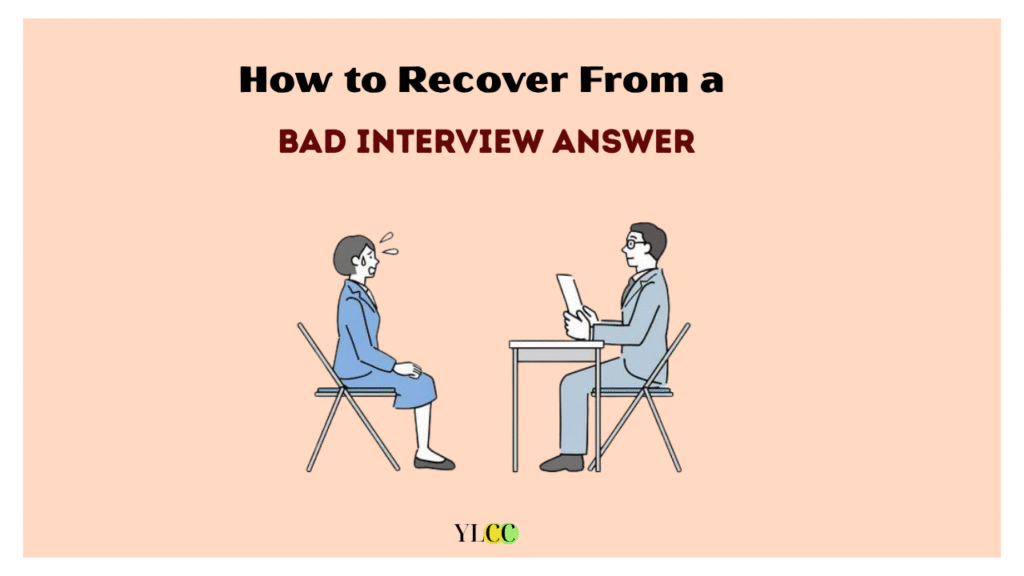
It happens to almost everyone: you give an answer, and mid-sentence you realise it is coming out badly, or you are blank, or you say something you immediately regret. And then the real danger begins, which is not the bad answer itself but the spiral: you get flustered, lose focus, and let one stumble derail the rest of the interview. Here is the reassuring truth: one bad answer rarely sinks an interview, and how you recover can actually leave a good impression. Let me show you how to reset in the moment and finish strong.
Quick answer
To recover from a bad interview answer, stay calm and do not spiral: one fumble rarely decides the outcome. If it helps, you can briefly and gracefully correct or add to your answer (“Actually, let me put that more clearly…”), then move on without dwelling. Refocus on the rest of the interview, since your recovery and overall performance matter more than a single stumble. Interviewers understand nerves and often value how you handle a wobble. So take a breath, reset, and keep going with composure. The recovery is more important than the mistake.
Why one bad answer rarely sinks you
Interviewers assess your whole performance, not a single answer, and they know that nerves cause stumbles. One weak answer is usually a small data point in a larger picture, and it can be outweighed by strong answers before and after. In fact, how you handle a stumble (with composure rather than panic) can itself be a positive signal, because it shows resilience and calm under pressure, which are genuine professional qualities. So the catastrophe you are imagining in the moment is almost always bigger in your head than in reality. That knowledge alone helps you stay calm.
How to recover in the moment
- Stay calm and breathe: the worst thing you can do is spiral. A brief pause to gather yourself is completely fine.
- Correct gracefully if it helps: if you can clarify or improve your answer, do so briefly (“Let me put that more clearly…”) without over-apologising or dwelling.
- Do not over-apologise or fixate: a quick reset is better than an anxious spiral of apologies. Acknowledge lightly if at all, then move on.
- Refocus on the rest: put the stumble behind you and give the remaining questions your full, composed attention. The interview is not over.
If you blank completely
If your mind goes blank on a question, do not panic. It is fine to take a moment (“Let me think about that for a second”), which is far better than blurting something incoherent. If you genuinely cannot answer, it is okay to be honest and reason as best you can, or to say you would need to think or research further, rather than fabricating. Composure and honesty when you are stuck often impress more than a flustered non-answer. And a single blank, handled calmly, is easily absorbed into a good overall performance.
YLCC ACTION STEP: If you fumble an answer, silently tell yourself, “One answer does not decide this. Reset and keep going.” Take a breath, briefly clarify if useful, and refocus on the next question. Practising this calm-reset mindset beforehand means that when a stumble happens (and it will), you recover instead of spiralling.
PLEASE DON’T DO THIS: Please don’t spiral or let one bad answer derail the rest of the interview; the spiral does far more damage than the fumble. And please don’t over-apologise or keep fixating on the mistake; a brief, graceful reset is best. And please don’t fabricate an answer when you are blank; composure and honesty beat a flustered invention. Reset, refocus, and finish strong.
FAQs
- Can one bad answer ruin an interview? Rarely. Interviewers assess your whole performance and understand nerves. One fumble is a small data point, often outweighed by strong answers and a composed recovery.
- How do I recover from a bad answer mid-interview? Stay calm, briefly correct or clarify if it helps, do not over-apologise or dwell, and refocus fully on the rest of the interview. The recovery matters more than the mistake.
- What if I blank completely on a question? Take a moment to think, reason as best you can, and be honest if you cannot answer rather than fabricate. Composure when stuck often impresses.
- Should I apologise for a bad answer? Lightly at most, then move on. Over-apologising and fixating do more harm than the answer itself. A graceful reset is best.
- Does how I handle a stumble matter? Yes, positively. Recovering with composure shows resilience and calm under pressure, which are genuine professional qualities interviewers value.
Thank you for reading!
If you found this article helpful, explore more resources from YLCC and continue your legal learning journey.